
Chronic back pain doesn’t stay in your back. It follows you into the car, the bedroom, the workplace, and the moments you should be enjoying with the people you love.
What begins as an “inconvenience” can gradually chip away at your sleep, confidence, mobility, and independence.
But with so many non-surgical back pain solutions available, how do you know which ones are worth trying and which ones are likely to leave you chasing temporary relief?
We decided to take a closer look. For this editorial comparison, we evaluated seven of the most common approaches people use for chronic back pain relief, from traditional in-person care to popular online programs.
The results were more revealing than we expected.
This Core Balance Training review shows how the program compares with six other popular approaches and why it ultimately earned our top ranking.
Our Comparison Method
How We Compared the Seven Options
We reviewed seven widely used approaches:
- Physical therapy
- Chiropractic care
- Massage therapy
- Free online routines and “quick-fix” stretches
- Supplements and at-home comfort gadgets
- Generic online back pain courses
- Core Balance Training
Then we compared each option using four factors that matter in real life:
Does the benefit last for hours, or can it support longer-term improvement?
Does it address factors that may keep the pain cycle going?
Can you continue making progress without relying on recurring appointments?
Does it consider the hips, core, breath, posture, and movement patterns?
The Question That Matters
Does an option simply help you feel better for a little while, or does it help you build the control and confidence to rely less on temporary fixes?
Testing the Most Popular Non-Surgical Back Pain Solutions
Option 1
Physical Therapy
Physical therapy is often one of the first recommendations people receive for chronic back pain, and for good reason.
✓ What We Liked
Physical therapy can provide professional oversight, individualized exercises, form correction, and gradual progression. For many people, that guidance is an important part of recovery.
Where It Can Fall Short
Appointments can be expensive, time-consuming, or difficult to schedule. Results may also fade when someone stops practicing between visits or returns to the same movement habits after treatment ends.
Bottom Line: A strong option for evaluation and professional guidance. Long-term progress still depends on what you continue doing outside the clinic.
Option 2
Chiropractic Care
Chiropractic care is another popular option people turn to when back pain flares up.
✓ What We Liked
Some people experience short-term improvement in pain, stiffness, or function following spinal manipulation. The hands-on nature of care can also feel reassuring during a difficult flare-up.
Where It Can Fall Short
The relief may be temporary, and recurring appointments can become costly. Passive care alone may not teach you how to improve the movement patterns or stability issues that affect daily life.
Bottom Line: It may help some people manage symptoms, but it is strongest when paired with an active plan that builds strength, control, and independence.
Option 3
Massage Therapy
Massage is often seen as a natural and soothing way to relieve tension.
✓ What We Liked
Massage can relax tight muscles, reduce stress, and provide short-term comfort. When pain has left the body feeling tense and guarded, that relief can be meaningful.
Where It Can Fall Short
Massage is primarily a passive treatment. It does not, by itself, teach the body new movement patterns or build the stability needed for everyday activity.
Bottom Line: A useful comfort and recovery tool, but usually not a complete long-term strategy for chronic back pain relief.
Option 4
Supplements and Back Pain Gadgets
Scroll through social media or watch late-night television and you will see countless pills, powders, creams, braces, cushions, and devices promising a better back.
✓ What We Liked
Heat, lumbar support, massage tools, and similar products may make sitting or resting more comfortable. Some are convenient and easy to use during a flare-up.
Where It Can Fall Short
A gadget cannot retrain your movement, and a supplement cannot replace an individualized treatment or exercise plan. Marketing claims often run far ahead of the evidence.
Bottom Line: Comfort tools can have a place, but they should not be mistaken for a complete solution to a persistent movement problem.
Option 5
Free Online Routines and “Quick-Fix” Stretches
Type “fix back pain” into YouTube and you will find thousands of free routines, miracle stretches, and exercises promising instant relief.
✓ What We Liked
Online videos are free, convenient, and available anytime. A gentle routine may provide useful movement after a long period of sitting or inactivity.
Where It Can Fall Short
There is no individual screening, consistent progression, or guarantee that a routine fits your needs. One video says to twist and stretch. The next warns you to avoid those movements completely. That leaves you guessing.
Bottom Line: Good for free ideas, but random videos rarely add up to a clear and progressive plan.
Option 6
Generic Online Back Pain Courses
Structured online courses improve on random videos by giving users an order to follow.
✓ What We Liked
A well-organized course can be more affordable than recurring appointments and easier to fit into daily life. At-home access removes travel and scheduling barriers.
Where It Can Fall Short
Quality varies widely. Some programs are overly broad, too intense, poorly explained, or built around long workouts that are difficult to maintain. Others offer a video library without meaningful progression or support.
Bottom Line: Better than jumping between random videos, but the creator’s qualifications, program structure, progression, and support matter enormously.
★ Our Clear Winner
7. Core Balance Training
We saved the most unconventional option for last. Honestly, we nearly dismissed Core Balance Training as just another online course.
We were wrong.
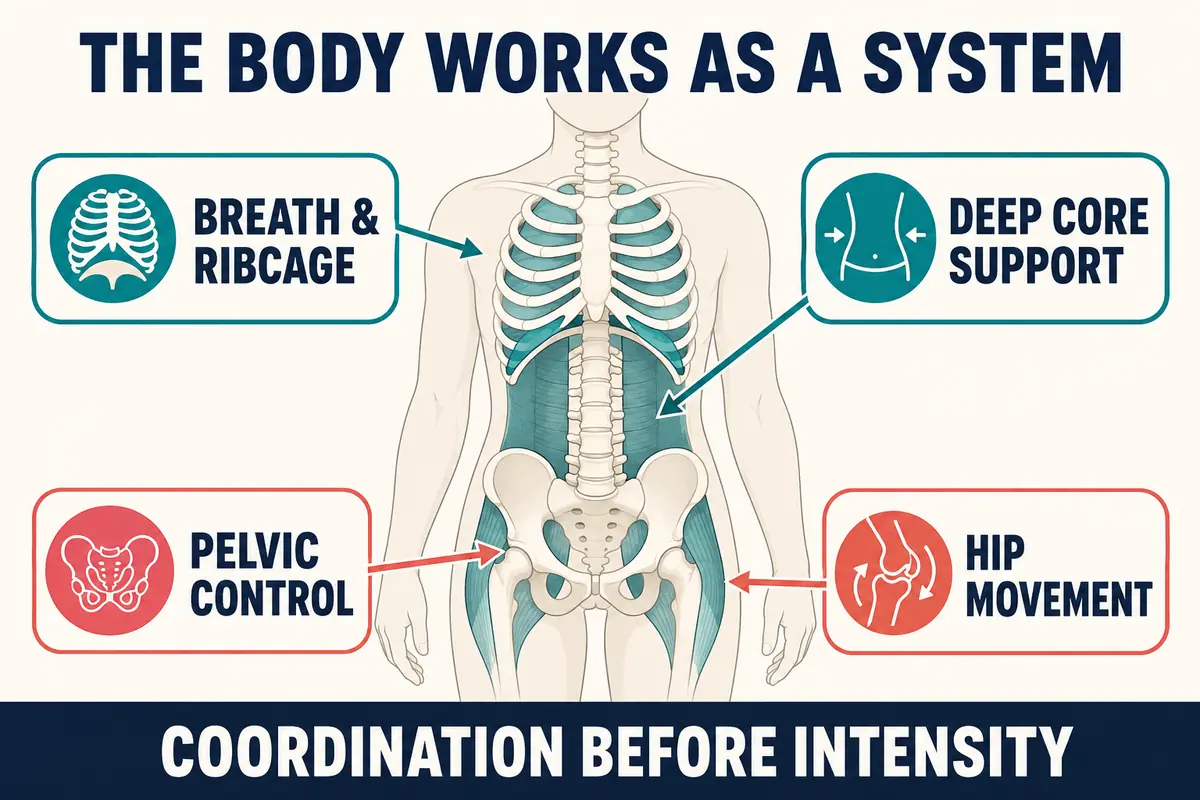
Core Balance Training was developed by Dr. Ryan Peebles, a Doctor of Physical Therapy who spent years dealing with chronic back pain himself. Instead of focusing only on the sore area, the program teaches users how breathing, deep core support, pelvic control, posture, and everyday movement work together.
The goal is not to keep chasing each flare-up. It is to help the body build a more reliable foundation for movement.
For another look at the program’s biggest strengths, read why people recommend Core Balance Training.
- About 15 minutes of guided practice a day
- Gentle lessons that progress step by step
- No gym membership or special equipment required
- Created by a Doctor of Physical Therapy
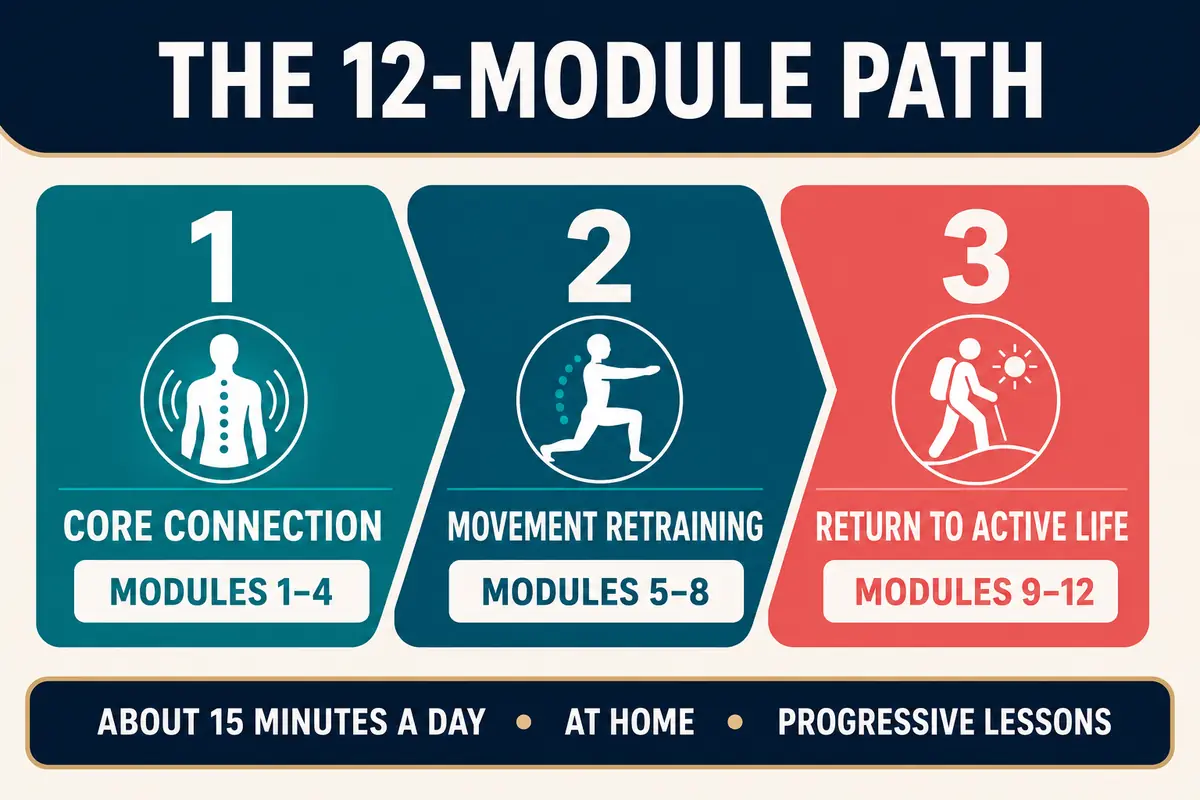
- A structured 12-module movement-retraining path
- Used by more than 30,000 students
✓ What We Liked
It matched all four of our comparison criteria. The program is cause-focused, structured for at-home independence, built around the whole movement system, and designed to support progress beyond temporary symptom relief.
What You Should Know
This is not an overnight fix, and no program works the same way for everyone. Core Balance Training requires consistent participation. The daily commitment is short, but you still have to do the work.
Bottom Line: Of the seven non-surgical back pain solutions we compared, Core Balance Training offered the clearest combination of expert guidance, daily accessibility, whole-body movement retraining, and long-term independence.

Meet the Creator
Dr. Ryan Peebles, DPT
Core Balance Training grew out of Dr. Ryan’s own decade-long struggle with chronic back pain. His personal experience, combined with his training as a Doctor of Physical Therapy, led him to study how deep core engagement and coordinated movement can influence the way the back feels and functions.
You can also read more about Dr. Ryan Peebles’ approach to chronic back pain.
That work became the foundation of the program now used by more than 30,000 students.
Program Creator
30,000+ Students
See How Your Body Responds
Try Core Balance Training Free for 7 Days
Start with the foundational lessons, follow the gentle daily routine, and decide from your own experience whether the approach feels right for you.
- About 15 minutes a day
- No special equipment required
- Guided lessons and member support
No charge during the 7-day trial. Membership is currently $99 per month afterward unless canceled. Paid membership includes a 30-day money-back guarantee. Review the current terms on the offer page before enrolling.
A Closer Look at Why Core Balance Training Rose to the Top
The Core Balance Training Difference
How It Works in Plain English
When back pain lasts for months or years, many people begin moving differently. They brace, guard, avoid certain motions, and rely on other areas of the body to compensate.
Reconnect
Begin with breathing, awareness, and deep core engagement.
Retrain
Build better stability, control, and coordinated movement.
Carry It Into Life
Use that support while sitting, standing, walking, bending, and lifting.
Core Balance Training begins by helping users reconnect with the deep stabilizing muscles that support controlled movement. The lessons then build progressively so that better support and coordination can carry over into real life.
That is what makes the program feel different from a collection of stretches. It teaches a sequence, explains the purpose of each step, and gradually connects the pieces.
For a more detailed walkthrough, see how the 15-minute Core Balance Training routine works.
What You Actually Do
- Follow guided sessions that take about 15 minutes a day
- Practice breathing, gentle isometric engagement, controlled mobility, and movement awareness
- Progress through 12 modules that build on one another
- Learn how to bring that control into everyday movement
A Simple Way to Start
See What 15 Minutes a Day Can Feel Like
You do not have to commit based on promises. Use the free trial to experience the foundational lessons at home and decide whether the approach feels right for your body.
Try Core Balance Training Free →
Free for 7 days. Cancel during the trial if it is not right for you. Membership is currently $99 per month afterward unless canceled.
Who It May Be Right For
- People who are tired of bouncing between temporary fixes
- Adults who want a doctor-designed program they can follow at home
- Cautious beginners who want to start gently
- Active adults who want more confident and resilient movement
- People willing to practice consistently for about 15 minutes a day
Who It May Not Be Right For
- Anyone looking for a passive treatment where someone else does all the work
- Anyone expecting guaranteed or instant results
- Anyone unwilling to practice consistently
- Anyone advised by a healthcare professional not to begin a new movement program
The Verdict at a Glance
Our Final Take
The best program is not the one that makes the biggest promise. It is the one you can follow consistently, understand clearly, and use to become less dependent on temporary relief.
That is why Core Balance Training stood out.
Frequently Asked Questions About Core Balance Training
How soon could I notice a difference?
Everyone responds differently. Some participants report changes in comfort, confidence, or ease of movement during the first week. For others, improvement is more gradual. The program is designed around progressive practice, not an instant fix.
Is Core Balance Training gentle enough for older adults or people who feel deconditioned?
The program is designed to begin gently and progress gradually. You do not need to be athletic or flexible to start. However, anyone with a medical condition, recent injury, new or worsening symptoms, or concerns about exercise should speak with a qualified healthcare professional first.
Do I need equipment or a gym membership?
No special equipment or gym membership is required. Most lessons can be completed at home with enough comfortable space to move.
How is this different from physical therapy, chiropractic care, or massage?
Those approaches can be valuable depending on your needs. Core Balance Training is different because it is a structured at-home movement program built around daily practice and increasing independence. It does not require recurring hands-on appointments.
Is this just another collection of exercise videos?
No. The lessons follow a 12-module progression. They begin with breathing, awareness, and foundational core engagement, then build toward coordinated movement that can carry over into daily life.
Can it help with sciatica, spinal stenosis, herniated discs, or other diagnosed conditions?
Core Balance Training is used by people with a range of back-related concerns, but no online program can promise the same result for every diagnosis. If you have a diagnosed spinal condition, nerve symptoms, unexplained weakness, recent trauma, or worsening pain, consult your healthcare provider before starting.
How does the free trial work?
You can access Core Balance Training for seven days without being charged. If you continue after the trial, membership is currently $99 per month. Cancel before the trial ends if it is not right for you. Paid membership is also backed by a 30-day money-back guarantee. Always review the current terms on the program page before enrolling.
Start With Seven Days Free
You Don’t Have to Take Our Word for It
Use the free trial to explore the lessons, experience the approach, and decide whether Core Balance Training fits your body, your schedule, and your goals.
- Start with gentle foundations
- Practice about 15 minutes a day
- Make your decision from your own experience
Explore Core Balance Training Free →
7-day free trial. $99 per month afterward unless canceled. 30-day money-back guarantee on paid membership. Individual results vary.
This article is a sponsored feature presented by Core Balance Training. It is an editorial comparison, not a clinical trial or substitute for individualized medical care. The information is provided for educational purposes only and is not intended to diagnose, treat, cure, or prevent any medical condition. Individual results vary. Always consult your healthcare provider before beginning a new exercise or wellness program, especially if you have a diagnosed condition, recent injury, or new or worsening symptoms.