I recently wrote about my husband and I getting back in the gym after 50 and I received some great feedback…
But the gym isn’t for everyone – and that’s okay!!
The truth is that going to the gym doesn’t always make sense in a real-life way.
Like when your schedule is already full, your body doesn’t always cooperate, and the idea of loud music, mirrors, and complicated machines feels… exhausting.
So, if you love the gym, that’s great. But, if you don’t?
You’re definitely not alone.
One of the most common messages I get from readers is some version of:
“I know I should be doing something for my health… I just don’t want it to be that.”
The good news is, it doesn’t have to be.
You can get healthier, stronger, steadier, more energized without a gym.
No membership pressure or pretending to enjoy something you don’t.
Sound hard? Nah, it’s easier than you think…
Here are three simple, realistic and relatively easy ways to do exactly that.
Walking Still Counts (More Than You’ve Been Told)
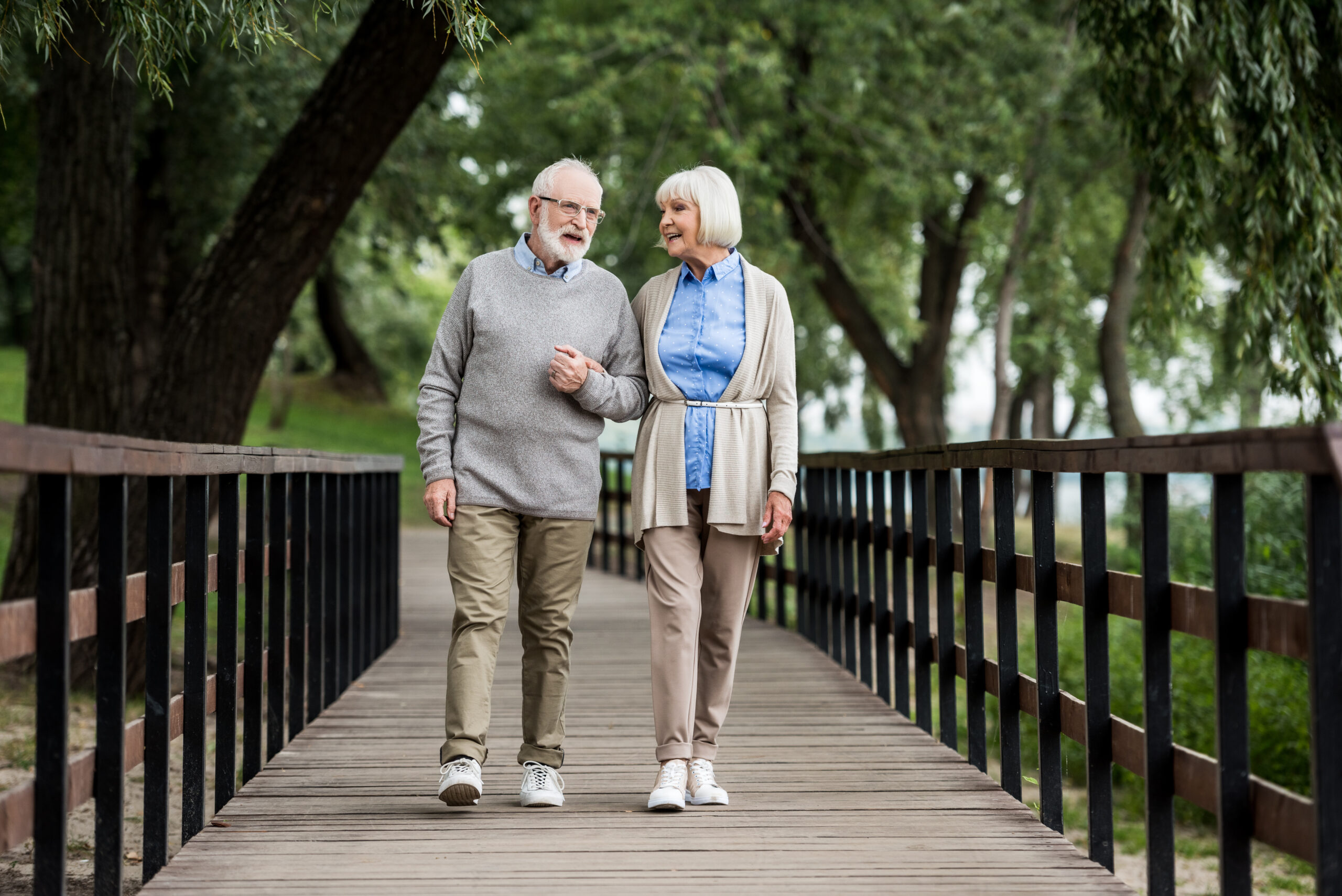
Somewhere along the way, walking got downgraded.
It stopped being “real exercise” and turned into something people apologize for. As if it only counts if it leaves you sweaty, sore, or gasping for air.
That’s simply not true.
Walking is one of the most reliable, joint-friendly, confidence-building forms of movement there is — especially after 50.
A good walk can:
- loosen stiff joints
- improve circulation
- support balance
- boost mood
- gently strengthen your legs and hips
And maybe most importantly, it’s sustainable.
A walk around your block.
Ten minutes down the driveway and back.
A stroll with a friend.
It all counts.
I’ve heard from so many readers who avoided getting heathy for years because they thought it had to be hard. It doesn’t.
Once they gave themselves permission to walk — consistently, comfortably — everything started to feel more possible.
If getting healthier feels overwhelming, start here.
Simple At-Home Strength Training
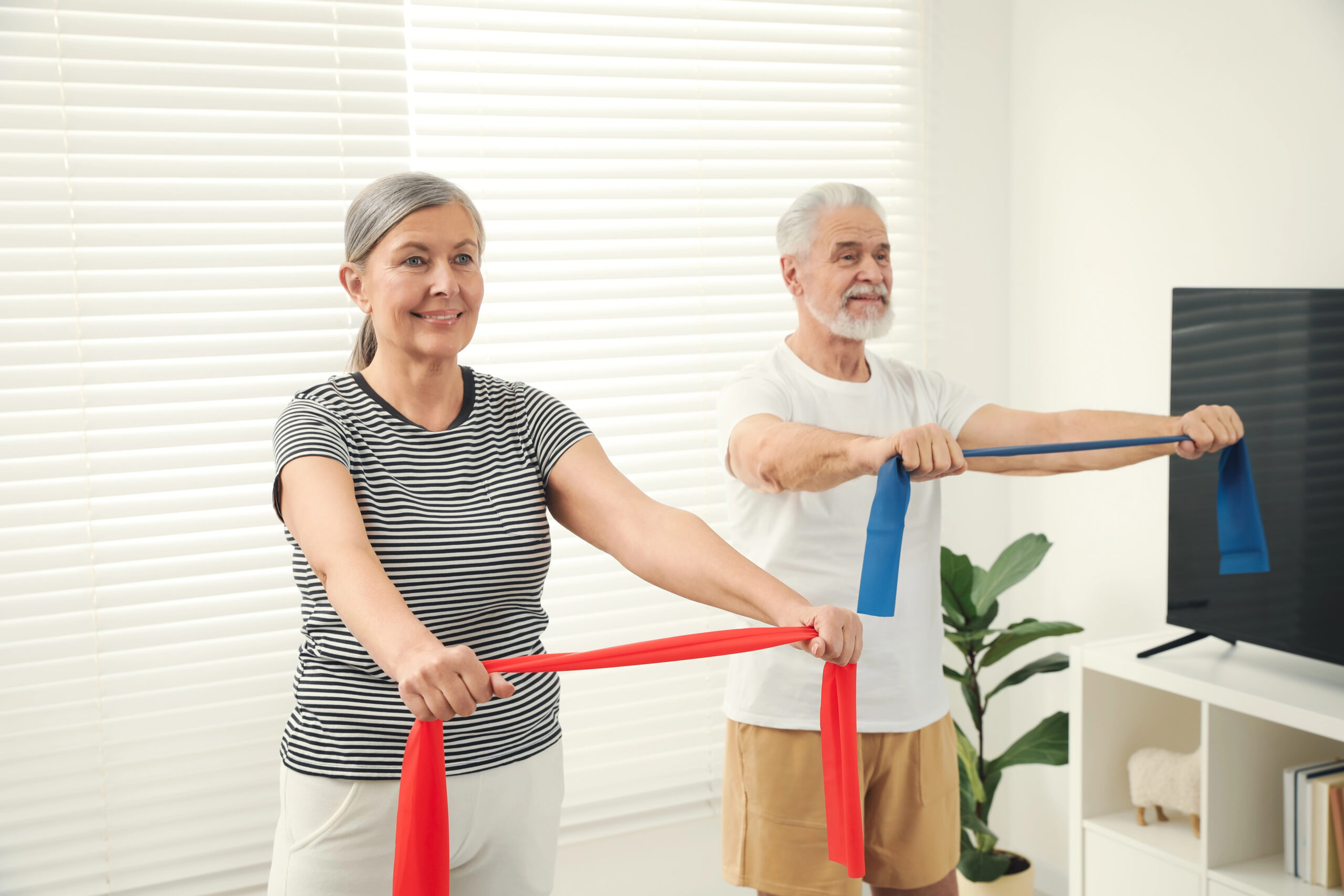
When people hear the term strength training, they often picture barbells, loud gyms, or exercises they’re pretty sure will hurt.
That’s not the kind of strength training I’m talking about.
After 50, strength training is often less about lifting heavy things and more about supporting your body through everyday life.
It’s about:
- standing up from a chair without effort
- carrying groceries without bracing
- feeling steady when you reach, twist, or bend
- trusting your legs when you take the stairs
And you can build that kind of strength at home.
Very simply and gently.
A few examples many readers start with:
- sitting down and standing up from a chair
- wall push-ups instead of floor push-ups
- slow, controlled leg lifts while holding onto a counter
- light resistance bands
- even using your own body weight with good support
The key isn’t how hard it looks. It’s how controlled it feels.
Slow movements.
Good posture.
Breathing normally.
You don’t need to exhaust yourself to get stronger…
You just need to put in some effort — regularly, calmly, and without fear.
Gentle Core Training
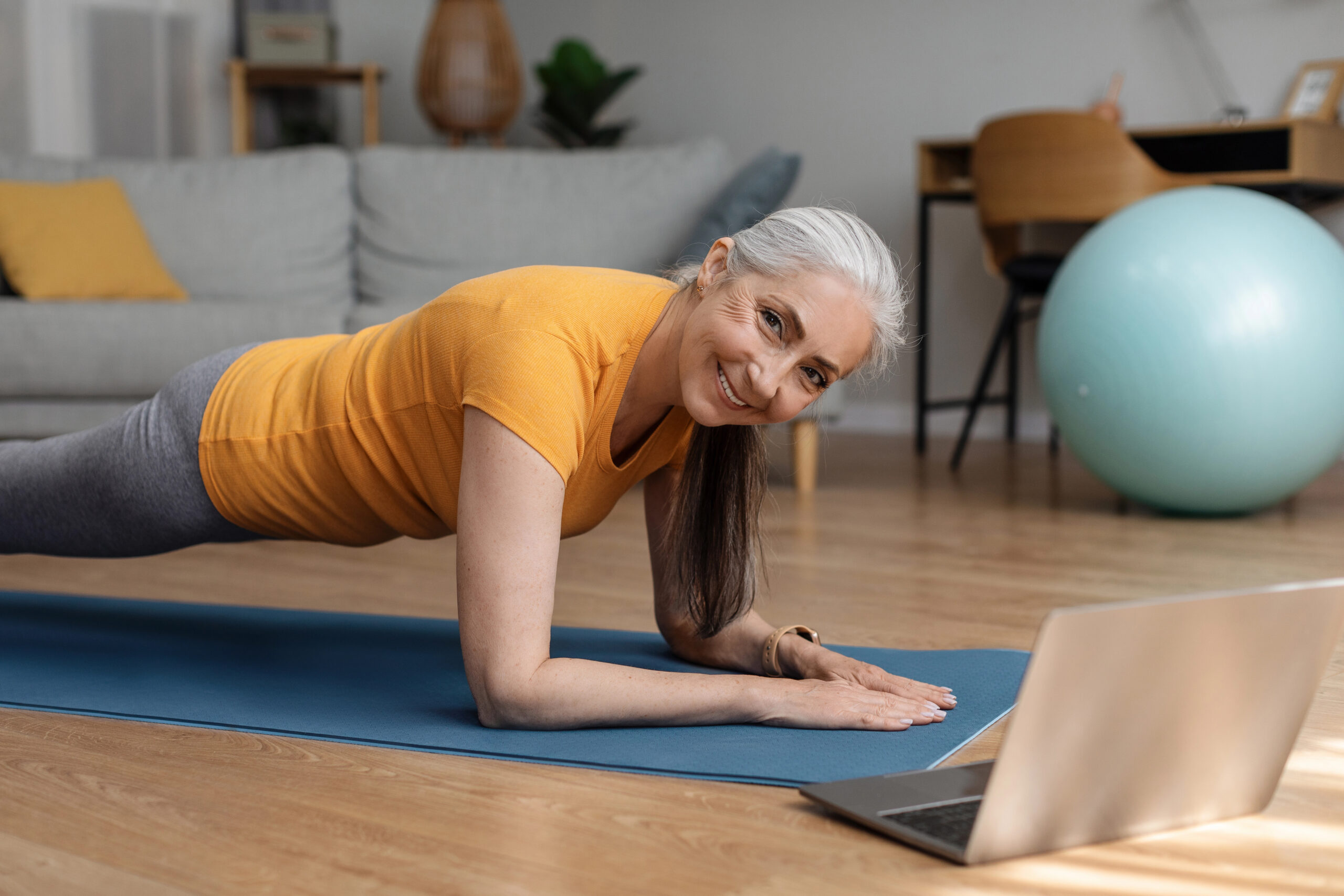
This is the part of getting healthy at home that almost everyone misunderstands at first.
When most people hear core, they think something that hurst just thinking about it…
That’s not what I mean here.
What I’m talking about is stability.
After 50, a lot of discomfort doesn’t come from weakness — it comes from your body trying to protect itself without the right support.
So, it braces. It grips. It overworks the wrong muscles.
That’s when movements start to feel awkward, heavy or unpredictable.
Gentle core and stability work focuses on teaching your body how to support itself from the inside, so everything else feels easier.
At home, this often looks like:
- floor-based movements done slowly
- knees bent, feet supported
- breathing that stays calm and natural
- movements that feel surprisingly subtle
Nothing flashy or forced.
In fact, many people are shocked by how easy it looks — until they feel how different their body responds afterward.
This kind of work isn’t about burning muscles.
It’s about helping your body remember how to move together again.
And for many this is the when everything starts to change… for the better.

Out of these three options, the ones I’ve seen personally making the biggest difference in the lives of our readers is a combination of walking and core strengthening/re-training.
Now, the walking part is pretty self-explanatory and there’s not much more needed to say to get you started… but what about core retraining?
That’s where Core Balance Training comes in – and it really is a game changer.
In fact, over 30,000 men and woman have already tried it and say it has made a world of difference in almost every aspect of their lives…
So, what exactly is Core Balance Training?
CBT is a gentle, floor-based movement program designed for adults who want to feel steadier, stronger, and more confident — without pushing through pain.
The sessions are short, usually about 15 minutes a day, and they’re done at home.
No gym.
No equipment.
No “powering through.”
Instead, the program focuses on teaching your body how to:
- activate deep support muscles before movement
- reduce gripping and over-bracing
- move with more control and less hesitation
- rebuild trust in everyday motion
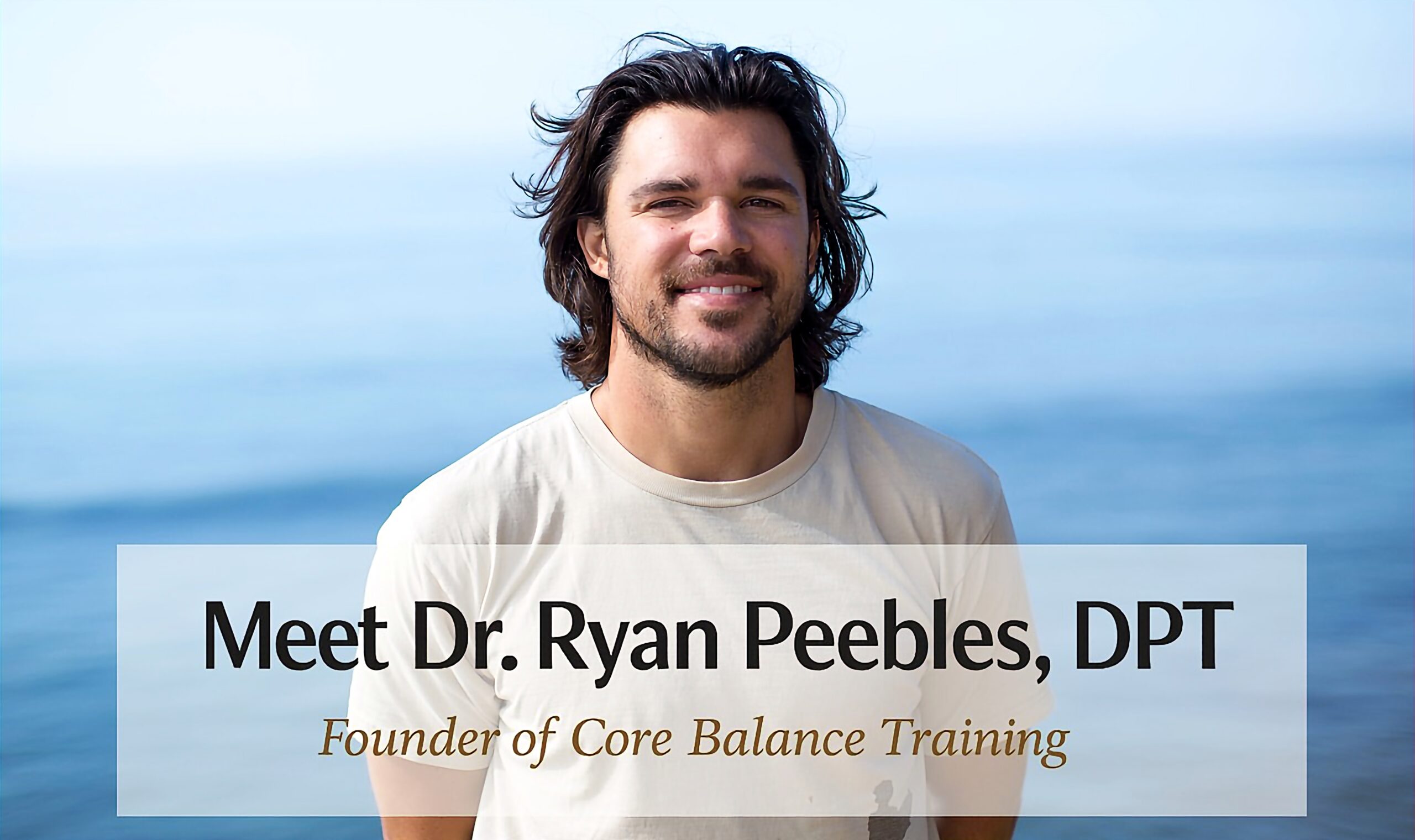
Core Balance Training was created by Dr. Ryan Peebles, a Doctor of Physical Therapy who developed the system after years of dealing with chronic back pain.
The kind of debilitating pain that takes away any enjoyment from living…
In fact, in just his 20’s he was told that he should prepare for a life in a wheelchair.
Refusing to just accept this fate he began studying everything about the root causes of back pain.
He even earned his doctorate in physical therapy.
Eventually, he discovered that most back pain treatments are temporary fixes – not permanent solutions that FIX the underlying reasons behind the pain.
That he didn’t need pills, injections, endless therapy sessions, adjustments or surgery…
But rather a re-training of how his body moves.
This led him to creating Core Balance Training – a simple system that allowed him to free himself from the ravages of chronic back pain and that now has done the same for thousands of others just like him…
These are REAL people who are openly sharing their stories of what Core Balance Training has done for them – so others will also find freedom from their own prisons of pain.
“After years of chronic back pain, this is the first program that made my body feel like it was finally working with me, not against me.”
— Cherie B., former Physical Therapy Assistant“I was preparing myself for surgery. Now I’m moving comfortably again — something I honestly didn’t think was possible.”
— Nick B.“I couldn’t climb stairs without pain. Now I’m walking five miles a day, including hills.”
— C.C. Shelp, Special Education Teacher“I’ve tried everything over the last 20 years. This was the first thing that didn’t overwhelm me — and the first thing that actually stuck.”
— Gloria S., retired nurse
What stands out in these stories isn’t intensity.
It’s relief.
How Core Balance Training Fits Into Real Life
Core Balance Training isn’t designed to take over your schedule.
It’s meant to fit into it.
Most people follow the guided videos at home, a little each day, gradually building:
- steadiness when standing or walking
- ease during everyday movements
- confidence that their body won’t “flare up” unexpectedly
Many readers say they notice changes within the first week — not dramatic transformations, but subtle shifts that make daily life feel easier.
And that’s often what keeps them going.
A No Risk Way to Try Core Balance Training Yourself
For a limited time, Core Balance Training is offering a 7-day free trial.
This gives you full access to the entire program so you can experience it for yourself — without pressure or any long term commitment.
You’ll know pretty quickly whether it feels right.
And if it doesn’t?
You’re free to walk away.
But if it does, you may find that getting healthier at home doesn’t require extreme effort — just the right kind of support.
You literally have NOTHING to lose – except the pain that is draining you.
Sponsored & Medical Disclaimer
This article is a sponsored feature presented by Core Balance Training. The information provided is for educational purposes only and is not intended to diagnose, treat, cure, or prevent any medical condition. Individual results may vary. Always consult your healthcare provider before beginning any new exercise or wellness program.